A Scar, a Principle, and a Mystery
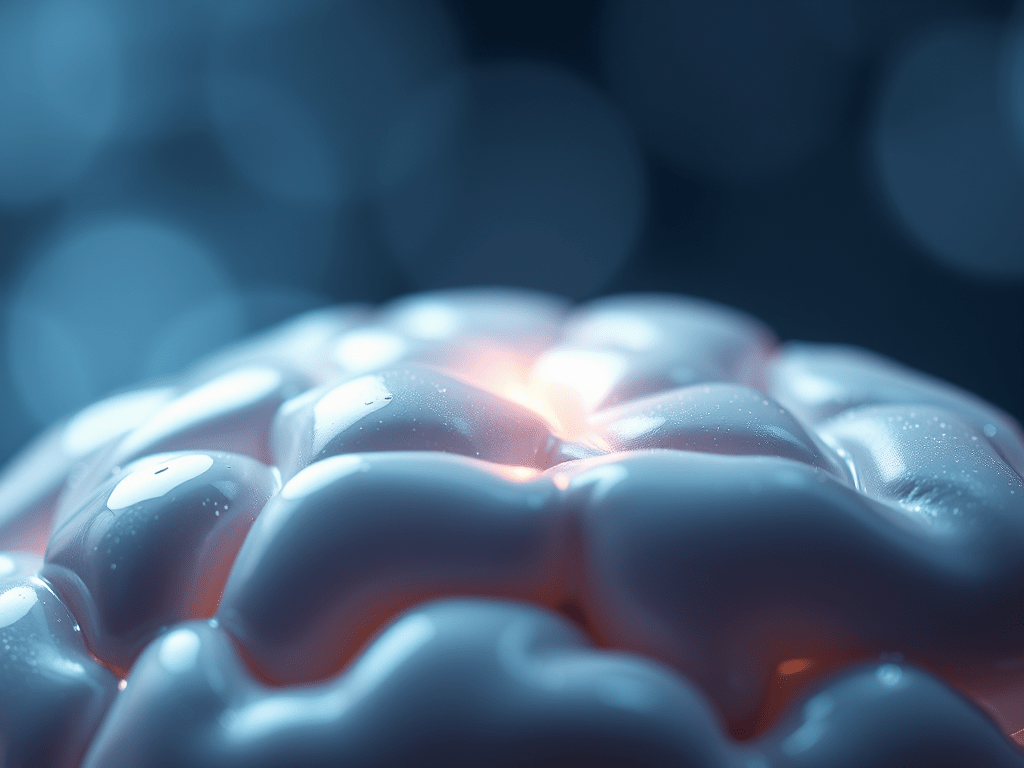
When a surgeon lifts the bone flap and looks down upon the surface of an injured brain, what meets the eye is not always raw cortex but a thin, opalescent film. This film—a glial scar—is the nervous system’s emergency patch-kit: astrocytes knit themselves into a mesh, microglia lay down molecular cement, and the whole sheet settles over damaged tissue like a biological bandage only a few hundred micrometres thick. Neuroscientists usually regard it as a nuisance, a barrier to regenerating axons.
To a small circle of theorists, however, that shimmering layer offers something else: a canvas large enough, coherent enough, and strangely two-dimensional enough to echo a radical idea from theoretical physics—the holographic principle, which says that the maximum information inside a volume may be written on its boundary surface. Marry the two, they suggest, and you get a speculative engine for one of the most puzzling human reports: the panoramic life-review that flashes before the mind in deep trance, cardiac arrest, or a near-death fall.
Their proposal—nicknamed the Holographic Akashic Record—runs like this.
How a scar could become a storage surface
First, consider the scar’s composition. Reactive astrocytes couple through dense gap junctions, allowing calcium waves to ripple across millimetres of tissue. Those waves unfold a hundred times more slowly than spikes in neurons, but they do carry phase information and can interfere just like ripples on water. The scar’s extracellular matrix, meanwhile, is rich in charged polysaccharides that lower electrical impedance; electric fields linger there longer than in the surrounding grey matter.
Imagine, then, the cortical tumult of an emotionally charged scene—your first kiss, the sudden screech of tires—radiating local field potentials in every direction. Where these fields strike the scar they interfere, producing, in principle, a standing-wave pattern: a two-dimensional, frequency-dependent “hologram” of the original event. The scar’s area, not its thickness, sets the limit on how much detail the pattern can hold—precisely the scaling suggested by holographic physics.
Under ordinary, waking conditions the pattern is inert. But in the metabolic storm of a trance, in the flood of catecholamines that precedes syncope, or in the hypoxic lull of a cardiac arrest, broad waves of activity sweep through the cortex. If those waves re-excite the scar in resonance with its own standing fields, the interference pattern might project back into the cortex that created it. The experiencer is yanked into a vivid, cinema-quality replay—this is your life, rendered not from dusty synapses but from a shimmering membrane at the edge of damage.
Following the thread into the lab
A story is only as good as its first hard test, and the glial-hologram conjecture makes several firm predictions. People with larger cortical scars—say, long-surviving traumatic-brain-injury patients—should, if the idea is right, experience spontaneous flashbacks more often than those whose cortices healed cleanly. A scar’s electrical impedance map should not be smooth; it should be pock-marked with stable hot and cold spots that mirror patterns of past neural traffic. And if a neurosurgeon were to stimulate one of those hot spots while the patient lay awake under local anaesthesia, the odds of triggering a personalised memory ought to climb.
These claims are exquisitely testable. High-density electrocorticography can already paint impedance pictures at sub-millimetre resolution. Archived intracranial EEG offers years of reference activity against which to compare the scar’s electrical fingerprint. And epilepsy surgery provides rare windows in which electrodes, memories and the patient’s narrative can meet in real time.
An even cleaner experiment lives in animal work. Induce a pinpoint cortical injury in a rodent; during recovery, pair a distinctive sound with the animal’s neural activity in the affected region; months later, probe the scar with optogenetic light. If the sound pattern re-emerges in auditory cortex—or behavioural responses betray its recall—then the scar has indeed stored something.
What the outcome would teach us
Should every experiment fail, the result is still a map of the limits. We would know, quantitatively, how little information a scar can hold, how inert its electrical landscape truly is, and we would narrow the search for the biological seat of flashbacks to more orthodox mechanisms.
A success, conversely, would reshape three fields at once. Neuroscience would acquire an unexpected third substrate for memory, alongside synapses and epigenetic marks. Medicine would glimpse therapies—scar editing to dampen traumatic engrams or resurrect fading autobiographies. And information physics would find, in living tissue, an independent confirmation that nature seeks two-dimensional ledgers for three-dimensional stories.
The road between wonder and truth
None of this demands exotic quantum coherence or metaphysical scripts—only ordinary bioelectricity written on an extraordinary sheet. Whether that sheet truly behaves like a miniaturised event horizon remains to be seen. But the chain of reasoning is tight enough, the tools precise enough, and the phenomenon humanly important enough to justify the attempt.
A scar, after all, is nature’s reminder that life leaves traces. The question the Holographic Akashic Record asks is simple: how deep do those traces go? The answer, lurking at the blurred edge of injury and memory, now waits for the first bold technician to switch on the stimulator and listen.
 Horizon Perspective News
Leave a comment