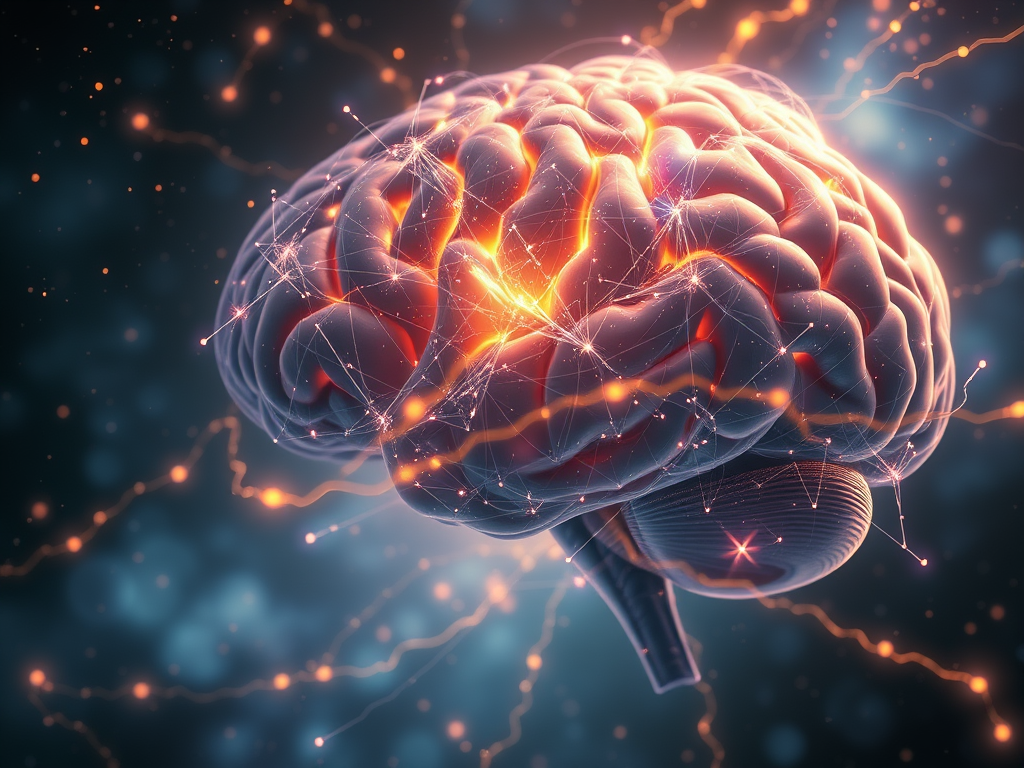
Could fleeting flips inside your brain let “you” peek across parallel universes?
A Many-Worlds Whisper
Ever woken up certain you’ve already lived the moment playing out before you? The coffee mug, the song on the radio, the exact words a friend is about to say—they all feel rehearsed. Neuroscientists file déjà vu under memory glitches. But a small group of theorists thinks the sensation might be physics knocking on consciousness.
Their audacious proposal blends the Everett “many-worlds” interpretation of quantum mechanics with the tiniest gears in our neurons. In standard many-worlds, every quantum event that could happen does happen, spawning parallel branches of reality. Normally, each branch is sealed off forever. The new idea—call it hyperfine tunneling of conscious moments—claims that brief quantum tricks inside the brain let awareness hop between neighboring branches. Déjà vu, they say, is the faint echo of a life path you almost—but not quite—took.
Sound wild? Absolutely. Yet the ingredients come straight from respectable science: solid-state qubits known as NV centers, the hyperfine physics used in atomic clocks, and the decade-old (and still controversial) notion that microtubules might host quantum coherence. Stir them together, and you get a hypothesis that straddles neuroscience, quantum information, and philosophy.
Microtubules: The Brain’s Skeptical Qubits
Inside every neuron lies a scaffolding of microtubules—hollow cylinders of the protein tubulin. In the 1990s, anesthesiologist Stuart Hameroff and mathematician Roger Penrose pitched the Orch-OR model, suggesting that quantum states inside these tubes contribute to consciousness. Most physicists roll their eyes; warm, wet brains seem too noisy for quantum delicacy.
Yet some details keep the conversation alive. Simulations show that certain pockets inside tubulin can shield electron orbitals from water, granting them picosecond-scale coherence—still short-lived, but not hopeless. And here’s the twist relevant to hyperfine tunneling: tubulin occasionally traps nitrogen impurities, forming defects reminiscent of NV centers in diamond. NV (nitrogen-vacancy) centers are a darling of quantum tech because their spin states stay coherent at room temperature and can be zapped with microwaves.
If similar defects nestle in microtubules, they could act as nano-qubits—each with a spin that can be “up,” “down,” or quantum-superposed.
Hyperfine Levels and the Everett Super-Highway
Now add the hyperfine interaction—a subtle magnetic coupling between an electron spin and the spins of nearby atomic nuclei. In atomic clocks, flipping hyperfine states marks the precise “ticks” that steer GPS satellites. The tunneling theory imagines something akin to that precision playing out in the brain: hyperfine transitions that are almost resonant between two Everett branches.
Here’s the speculative chain:
- Branching: At any moment, quantum noise (say, a random ion channel opening) nudges the neuronal machinery down slightly different paths. Two near-identical copies of your brain diverge by a few qubits.
- Near-degeneracy: Because the branches are so alike, certain hyperfine energy levels line up to within a minuscule gap—think of two guitar strings tuned almost to the same note.
- Tunneling: Quantum mechanics allows states to tunnel across any barrier if the energies match. A spin state on branch A can “borrow” amplitude from branch B for a heartbeat before decoherence slams the gate shut.
- Subjective Merge: Your integrated consciousness, sampling billions of such spin states, receives a brief composite of experiences—an I’ve seen this before flash—before branches separate again.
If true, consciousness isn’t hopping wholesale between universes; instead, fleeting quantum correlations let neighboring you’s share whispers. Déjà vu is the feeling of catching yourself in the act.
Hunting for the Quantum Ping
A theory this bold needs an experiment. The tunneling advocates outline a protocol equal parts neuroscience lab and quantum-tech startup:
- Find the Defects.
First, prove NV-like centers exist in neurons. Using nitrogen-15 isotope labeling, researchers would grow cultured neurons and scan them with optically detected magnetic resonance—the same trick used to map spins in diamond chips. A telltale fluorescence signature would be a landmark discovery by itself. - Tune the Splitting.
Next, place volunteers in an fMRI scanner wearing Helmholtz coils—pancake-shaped magnets that create exquisitely uniform fields. By sweeping the field strength, experimenters would search for a “déjà-vu resonance,” a narrow range where self-reported déjà vu spikes and coincides with heightened activity in temporal-lobe regions linked to memory. - Flip the Spins.
At that sweet spot, rapid microwave pulses would flip the NV-like spins, nudging hyperfine transitions out of alignment. If déjà vu episodes drop sharply (while control sensations remain steady), that’s evidence for a spin-based trigger. - Cross-branch Correlation?
The true pièce de résistance would be paired experiments: two volunteers whose brains are entangled via photon-mediated NV spins (an ambitious, but not impossible, extension of recent brain-to-brain “brain-net” studies). A correlated déjà vu spike across both subjects would hint that hyperfine tunneling leaks information, however tiny, between Everett branches.
Skeptics see tall hurdles: biological decoherence times measured in nanoseconds, confounding psychological biases, and the minefield of subjective reports. But the tests, at least, are concrete—and that’s a hallmark of good fringe science.
If It Works (and If It Doesn’t)
Should an experiment confirm hyperfine tunneling, the consequences would shake more than neuroscience textbooks:
- Quantum Foundations: Many-worlds would jump from elegant math to observable correlate, demolishing the “interpretations are metaphysics” mantra.
- Mind-Machine Interfaces: NV-style control of microtubule spins could usher in conscious “quantum prosthetics,” tweaking awareness states or repairing memory disorders.
- Philosophy: Personal identity would gain a literal multiverse dimension. Death, déjà vu, and dream déjà-rêvé might be re-cast as traffic patterns on a cosmic branching graph.
Of course, a null result is equally instructive. Ruling out microtubule spin coherence would tighten the vise on Orch-OR and similar models, nudging consciousness studies back toward classical networks. It would also bolster the mainstream view that Everett branches don’t (and maybe can’t) talk.
Where Speculation Meets Curiosity
Mainline neuroscientists may groan, “Here we go again—another quantum-consciousness rabbit hole.” Fair enough. But recall that superconductivity, lasers, and magneto-encephalography once sounded impossible in “warm, noisy” environments. Biology has a track record of co-opting unlikely physics: photosynthetic molecules perform femtosecond quantum walks; bird retinas may detect Earth’s magnetic field via entangled radical pairs.
Hyperfine tunneling of conscious moments could prove a mirage—an elegant story that evaporates under scrutiny. Or, like those other surprises, it could reveal that nature has been running quantum software right under our skulls all along.
Either way, the adventure lies in testing the claim. By squeezing microtubules under quantum microscopes and asking volunteers to press a button when déjà vu hits, we bridge the gap between laboratory lasers and the ineffable flow of experience. In doing so, we honor the spirit of science: dare to imagine, but submit every dream to the mercy of the data.
So the next time familiarity washes over a brand-new scene, pause for a heartbeat. Maybe, just maybe, you’re tuning in to a broadcast from an almost-identical you, one branch over.
 Horizon Perspective News
Leave a comment