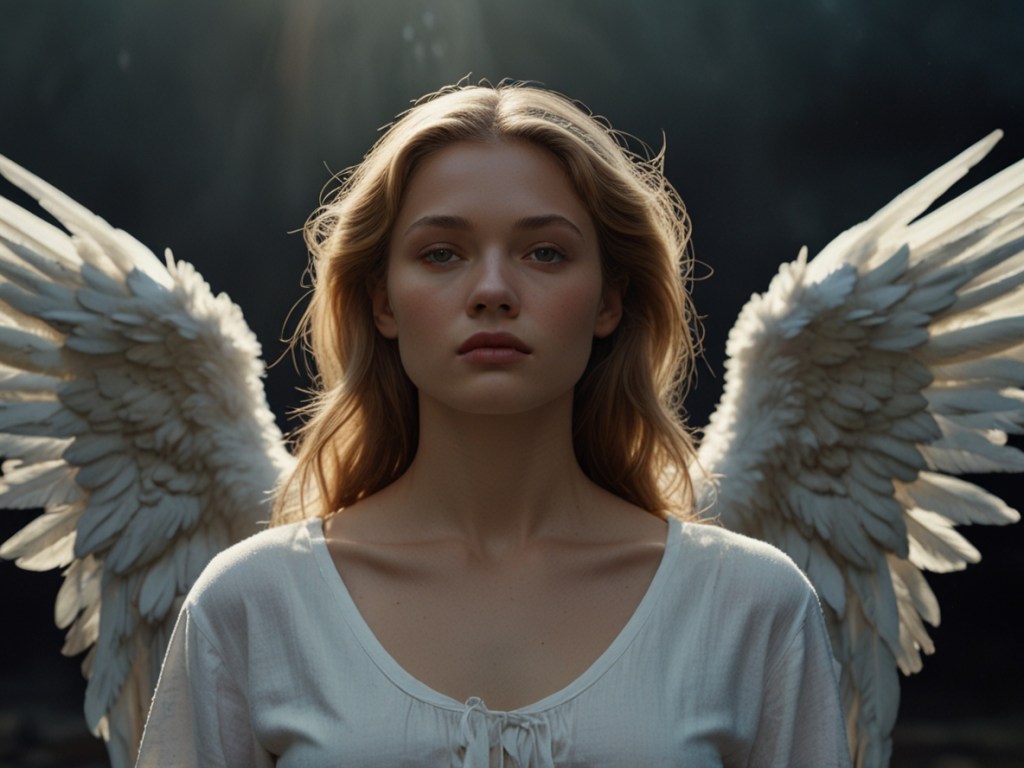
Ezekiel’s vision, one of the most vivid and enigmatic passages in the Bible, is found in the first chapter of the Book of Ezekiel. This vision occurred around 593 BCE while Ezekiel was among the Jewish exiles in Babylon, by the Kebar River. The vision is characterized by its rich and complex imagery, filled with symbols that have been interpreted in various ways throughout history.
The Opening Scene
The vision begins with a dramatic description of a stormy wind coming from the north, a great cloud with fire flashing forth continually, and a bright light surrounding it. In the midst of the fire, something appeared that gleamed like glowing metal.
“As I looked, behold, a stormy wind came out of the north, and a great cloud, with brightness around it, and fire flashing forth continually, and in the midst of the fire, as it were gleaming metal.” (Ezekiel 1:4)
The Four Living Creatures
From within this fiery cloud, Ezekiel saw four living creatures, each with a human form but possessing unique and otherworldly features.
- Appearance and Movement:
- Each creature had four faces: a human face in front, a lion’s face on the right, an ox’s face on the left, and an eagle’s face at the back.
- They had straight legs, and their feet were like those of a calf, gleaming like burnished bronze.
- Each creature had four wings: two wings stretched upward, touching the wings of the adjacent creatures, while the other two wings covered their bodies.
- Faces and Symbolism:
- Human face: Represents humanity.
- Lion’s face: Symbolizes strength and wild animals.
- Ox’s face: Denotes domestic animals and agricultural life.
- Eagle’s face: Stands for birds and the sky.
- Eyes and Mobility:
- The creatures were covered with eyes, symbolizing omniscience and divine perception.
- They moved straight forward without turning as they went, suggesting a purposeful and directed movement.
“As for the likeness of their faces, each had a human face. The four had the face of a lion on the right side, the face of an ox on the left side, and the face of an eagle.” (Ezekiel 1:10)
The Wheels
Beside each of the four living creatures was a wheel, an integral part of the vision’s complexity.
- Appearance and Structure:
- The wheels were dazzling, appearing like beryl.
- Each wheel had another intersecting wheel within it, allowing them to move in any direction without turning.
- The rims of the wheels were full of eyes, emphasizing the theme of divine awareness and knowledge.
- Function and Symbolism:
- The wheels represented the interconnectedness of the divine and earthly realms.
- They moved in sync with the living creatures, reflecting the harmonious order of the cosmos.
“The appearance of the wheels and their construction, their appearance was like the gleaming of beryl. And the four had the same likeness, their appearance and construction being as it were a wheel within a wheel.” (Ezekiel 1:16)
The Expansive Firmament
Above the heads of the living creatures was a firmament, an expanse like the color of awe-inspiring crystal, spread out above their heads.
- Crystal Firmament:
- This firmament separated the earthly from the heavenly, serving as a boundary between the two realms.
- It resembled a glittering expanse, indicating the purity and majesty of the divine abode.
“And over the heads of the living creatures there was the likeness of an expanse, shining like awe-inspiring crystal, spread out above their heads.” (Ezekiel 1:22)
The Throne and the Divine Presence
Above the firmament was a throne, and on this throne sat a figure resembling a human, surrounded by radiant splendor.
- Throne and Figure:
- The throne appeared to be made of sapphire, indicating royalty and divinity.
- On the throne sat a figure with a human likeness, from the waist up appearing like glowing metal, and from the waist down like fire, radiating brilliant light.
- Radiance and Rainbow:
- The surrounding light was like a rainbow in a cloud on a rainy day, symbolizing God’s covenantal faithfulness and mercy.
- The vision culminated in this brilliant display, underscoring the divine glory and majesty.
“And above the expanse over their heads there was the likeness of a throne, in appearance like sapphire; and seated above the likeness of a throne was a likeness with a human appearance.” (Ezekiel 1:26)
Conclusion
Ezekiel’s vision is a complex and multi-layered depiction of the divine. The living creatures, wheels, firmament, and throne all contribute to a scene of divine majesty, sovereignty, and omnipresence. This vision served to reassure the exiled Israelites of God’s enduring presence and control over the universe, transcending the earthly temple and their current circumstances. Whether interpreted through theological, extraterrestrial, or astrological lenses, Ezekiel’s vision continues to inspire and provoke profound reflection on the nature of the divine and the cosmos.
 Horizon Perspective News
Leave a comment