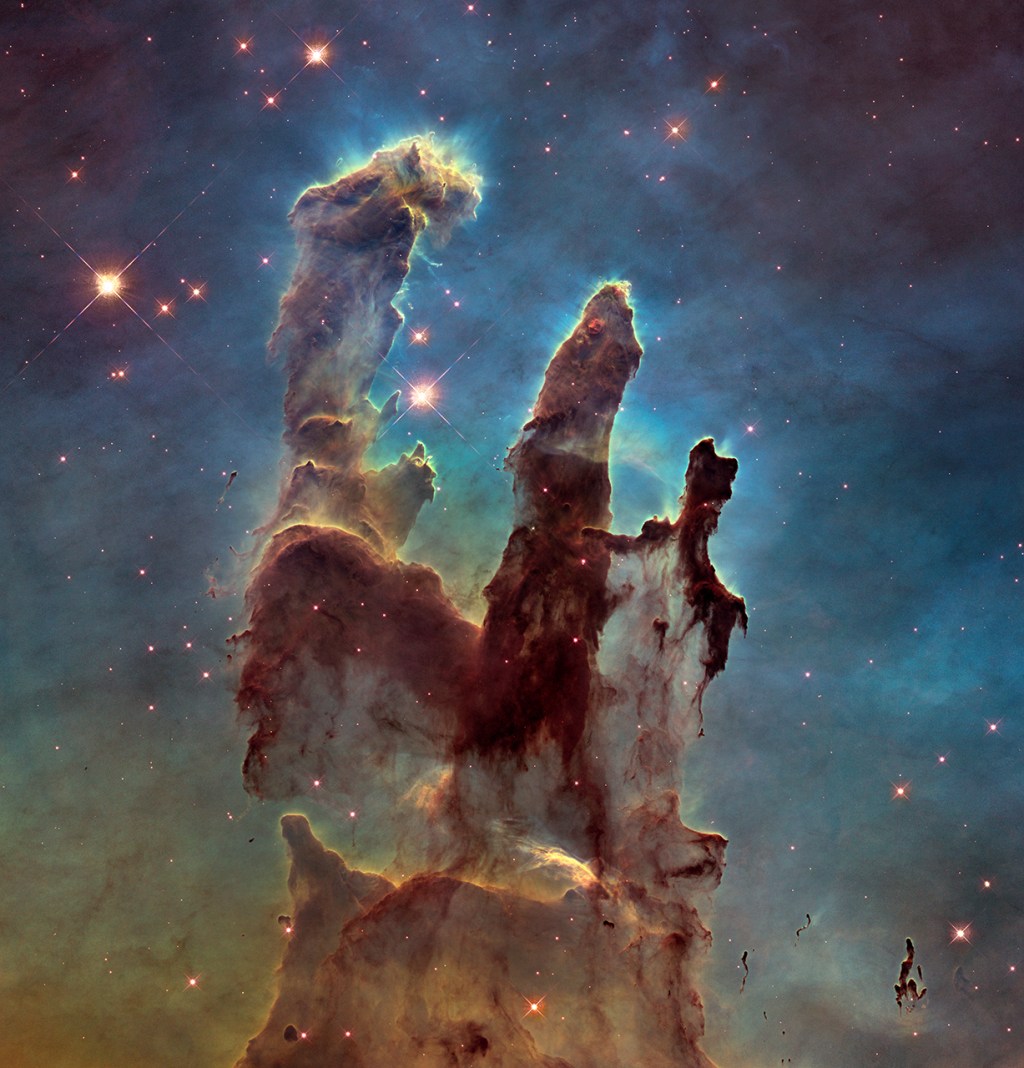
In the vast expanse of space, the Hubble Space Telescope orbits Earth, capturing breathtaking images that have ignited our curiosity and wonder. These cosmic snapshots, however, are not straightforward representations of what one would see through a telescope. Let’s delve into the reasons behind this captivating yet potentially misleading artistry.
The Art of False Color Imaging
Many Hubble images use “false color” to represent data. Since the telescope captures light in different wavelengths, scientists assign colors to these wavelengths to create a visual representation that is both informative and aesthetically pleasing. For example, infrared data might be shown in red, ultraviolet in blue, and so forth. This technique helps to highlight specific features and processes occurring within the observed objects.
While false color imaging is crucial for scientific analysis, it means that the colors we see in these images are not the true colors the objects would appear if viewed by the naked eye. Instead, they are carefully chosen to convey information and emphasize certain aspects of the data.
The Hubble Palette: A Symphony of Colors
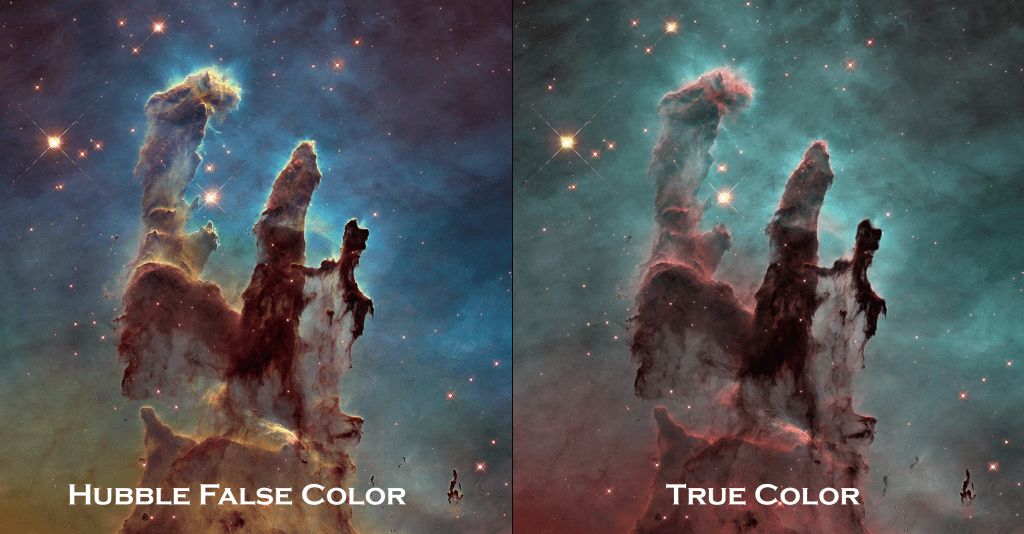
When you gaze at a Hubble image, you’re not witnessing the universe as it appears to the naked eye. The colors in these images are not inherent to the celestial objects themselves; they are assigned based on the wavelengths of light detected by Hubble’s instruments. Here’s how it works:
- Monochromatic Data Collection: Hubble’s charge-coupled device (CCD) records incoming photons in black and white. It doesn’t use color film like a traditional camera. Instead, it captures data across various wavelengths, including ultraviolet and infrared light.
- Color Mapping: To create the vibrant images we admire, astronomers apply filters to Hubble’s lens. Each filter isolates specific wavelengths of light. By taking multiple photos through different filters, scientists can assign colors to each image. For example, blue might represent data from the blue filter, red from the red filter, and so on.
- Artistic Choices: Here’s where the artistry comes into play. The colors assigned to Hubble images are often not what our eyes would perceive. They are chosen to highlight specific features or elements. For instance, the famous “Pillars of Creation” image assigns sulfur to red, hydrogen to green, and oxygen to blue. These choices enhance our ability to study the composition and structure of cosmic objects.
Long Exposures and Enhanced Detail
Another significant factor is the exposure time. Hubble images are typically the result of long exposures, sometimes lasting hours or even days. During these prolonged periods, the telescope collects far more light than the human eye could ever perceive, revealing faint and distant objects with incredible detail. This is why Hubble images often show intricate structures and fine details that would be invisible to us without the aid of powerful telescopes.
Additionally, post-processing techniques such as noise reduction, contrast enhancement, and color balancing are employed to improve the clarity and visual appeal of the images. These enhancements are necessary to bring out the faintest features and make the data more accessible for scientific interpretation and public enjoyment.
The Deceptive Beauty of Nebulae and Galaxies
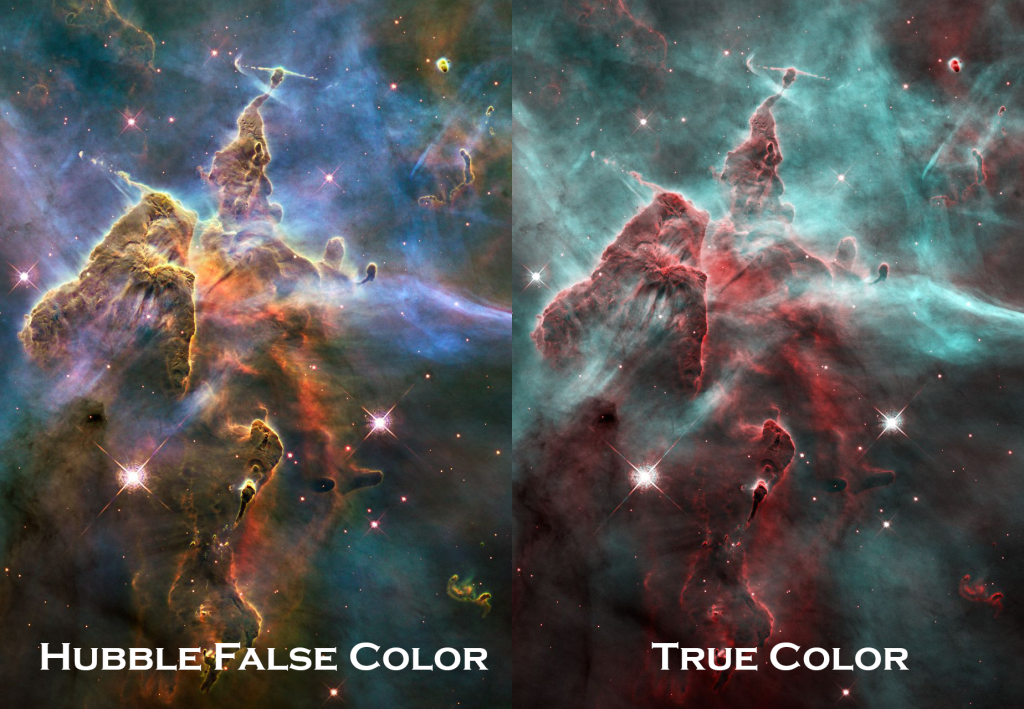
Why is this potentially misleading? Because Hubble’s images can create a false impression of the universe’s appearance. Imagine peering through a telescope and expecting to see vibrant hues, only to find a grayscale reality. The nebulae, galaxies, and star clusters we admire in Hubble’s pictures don’t actually look like that when observed directly.
Beyond Visible Light: Multispectral Insights
But wait, there’s more! Hubble’s magic extends beyond visible light. Sometimes, these images are combined with data from other telescopes that detect different forms of electromagnetic radiation:
- Radio Waves: The Very Large Array (VLA) and other radio telescopes provide complementary information. Radio waves reveal structures that optical telescopes miss. When combined, we get a fuller picture.
- X-rays: The Chandra X-ray Observatory captures high-energy X-rays from cosmic phenomena like black holes and supernovae. Overlaying X-ray data onto Hubble images reveals hidden dynamics.
- Infrared: The Spitzer Space Telescope peers into the infrared realm, unveiling warm dust clouds, newborn stars, and more. Infrared data complements Hubble’s visual observations.
The Dual Purpose of Cosmic Artistry
So, why create these composite images? First, they allow us to explore aspects of space that remain invisible to our eyes. Second, they inspire awe and curiosity. Hubble’s legacy isn’t just scientific—it’s also artistic. These images serve as ambassadors, inviting us to ponder the mysteries of the cosmos.
A Reminder and an Invitation
Next time you marvel at a Hubble picture, remember its dual nature: part science, part art. It’s a window into the hidden universe, a symphony of light and data. As we continue our cosmic journey, let’s appreciate both the beauty and the complexity, knowing that reality lies beyond the palette of colors and the wavelengths we can perceive.
 Horizon Perspective News
Leave a comment