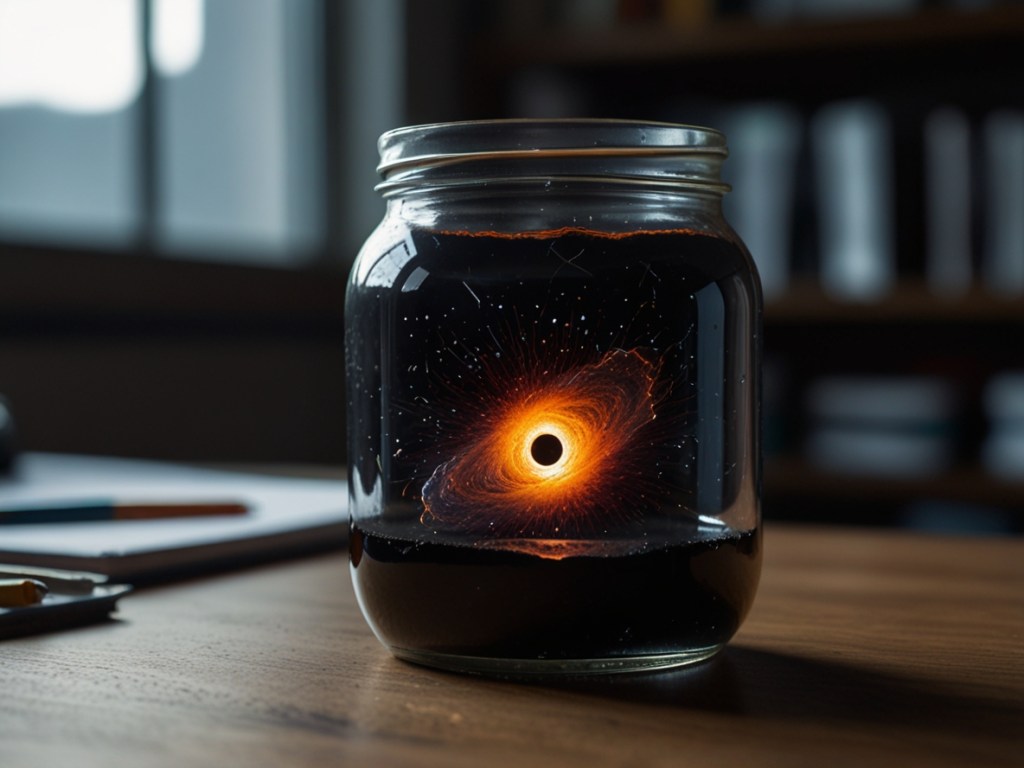
Cavendish’s Experiment: Measuring the Invisible Force
In the late 18th century, British scientist Henry Cavendish conducted a groundbreaking experiment to measure the gravitational constant, a fundamental step in understanding the force of gravity. Using a torsion balance apparatus, Cavendish was able to calculate the gravitational attraction between masses, an achievement that would later become crucial in the field of physics. This experiment provided a method to measure the strength of gravitational force, focusing on the effect of mass. However, it did not explain what gravity actually is, nor did it account for other forms of energy that contribute to gravitational effects.
Newton’s Mathematical Framework: Describing the Effects
Fast forward to the 17th century, Sir Isaac Newton formulated the laws of motion and universal gravitation. His work provided a mathematical framework that accurately described the gravitational attraction between bodies, predicting the movements of planets and objects with remarkable precision. Newton’s equations could explain the elliptical orbits of planets, the motion of the moon, and even the trajectories of comets. Despite their success, Newton’s laws focused primarily on the effects of mass and did not uncover the underlying cause of gravity. Instead, they merely described its effects in a mathematically coherent way.
Einstein’s Relativity: A New Ontological Framework
The quest to truly understand gravity took a significant turn with Albert Einstein’s theory of general relativity in the early 20th century. Einstein introduced a radically different ontological framework by proposing that gravity is not a force between masses but a curvature of spacetime caused by mass and energy. This shift acknowledged that every form of energy contributes to the gravitational field, not just mass. According to this theory, massive objects like the Earth and the Sun distort the fabric of spacetime, and this curvature directs the movement of objects.
Einstein’s theory was able to explain phenomena that Newtonian physics could not, such as the precession of Mercury’s orbit and the bending of starlight by the Sun observed during a solar eclipse. These observations confirmed the predictions of general relativity, marking it as a more comprehensive model of gravitational effects. However, even Einstein’s theory does not truly explain what gravity is. It provides a more accurate description of its effects, especially in extreme conditions, but it stops short of revealing the fundamental nature of gravity.
The Limitations of Relativity: Unanswered Questions
The limitations of general relativity become evident when attempting to reconcile it with quantum mechanics, the theory that governs the behavior of particles on the smallest scales. Despite numerous attempts, physicists have yet to develop a unified theory that integrates gravity with the other fundamental forces of nature. This ongoing challenge highlights the fact that while our theories can describe how gravity behaves, they do not fully explain what gravity is.
The pursuit of understanding gravity underscores a broader philosophical point: scientific theories provide models that conform to observations and predict outcomes, but they do not necessarily reveal the true nature of reality. Each theory, whether Newtonian mechanics or general relativity, offers a different perspective that works well under specific conditions. Yet, these perspectives are ultimately limited and provisional.
The Continuing Mystery of Gravity
In conclusion, despite centuries of scientific advancement, gravity remains one of the most profound mysteries in physics. Our current theories, from Newton’s laws to Einstein’s relativity, describe the effects of gravity with increasing accuracy but stop short of providing a definitive explanation of its essence. The recognition that all forms of energy, not just mass, contribute to gravity further complicates our understanding. The search for a deeper understanding continues, reminding us that science is an ever-evolving journey towards comprehending the fundamental nature of the universe.
 Horizon Perspective News
Leave a comment